Month: January 2026
New seafloor lander tested and in action
Posted on by Hannes Baumann
By Elizabeth Weidner.
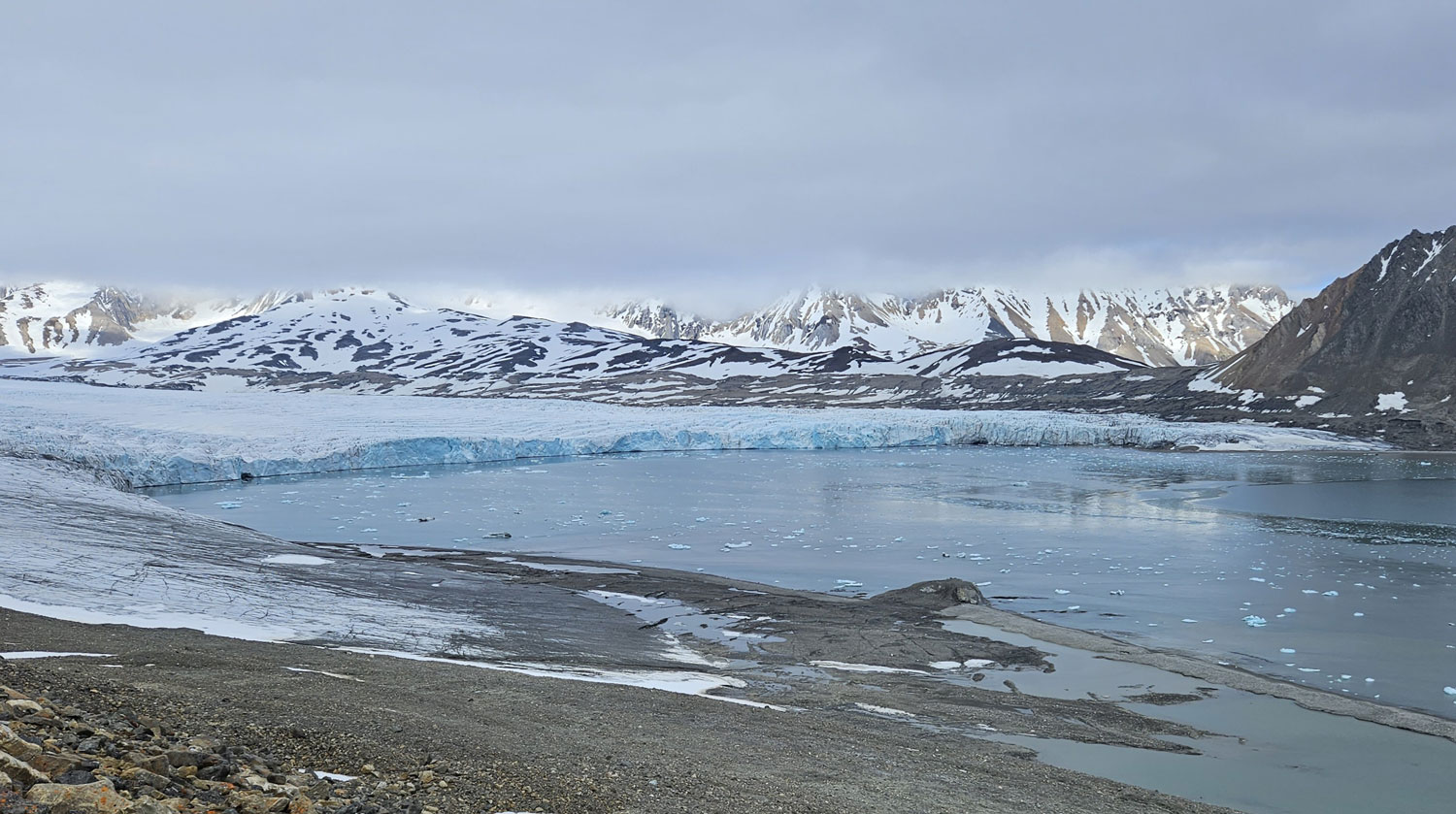
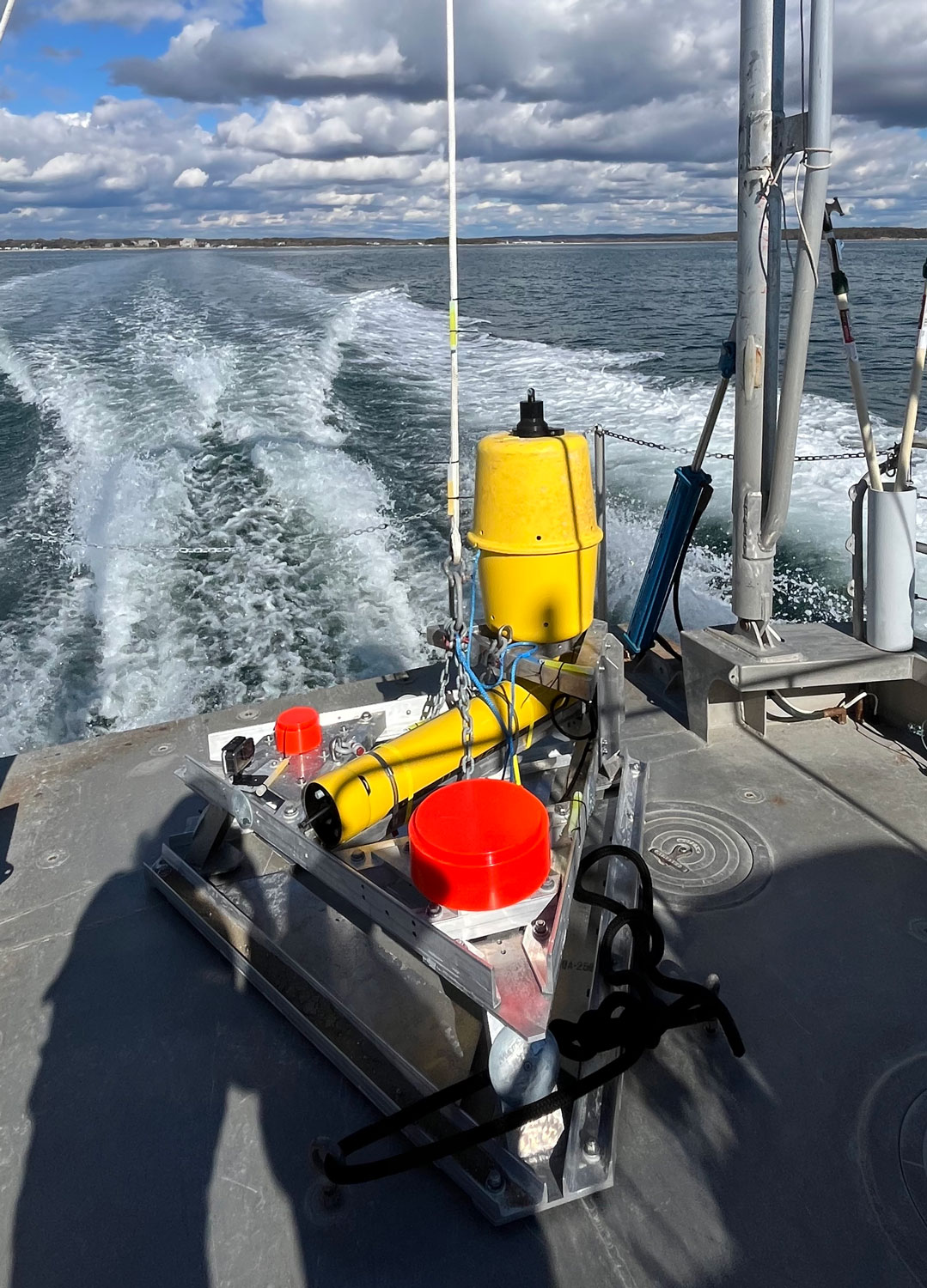
Over the past year, the Broadband Acoustics Lab, led by DMS Assistant Professor Elizabeth Weidner, designed and built a new kind of seafloor lander to investigate how melting glaciers are transforming the coastal Arctic ocean.
The custom-built instrument houses several advanced sonar systems that use sound to observe processes that are otherwise difficult to capture in remote, ice-covered environments.
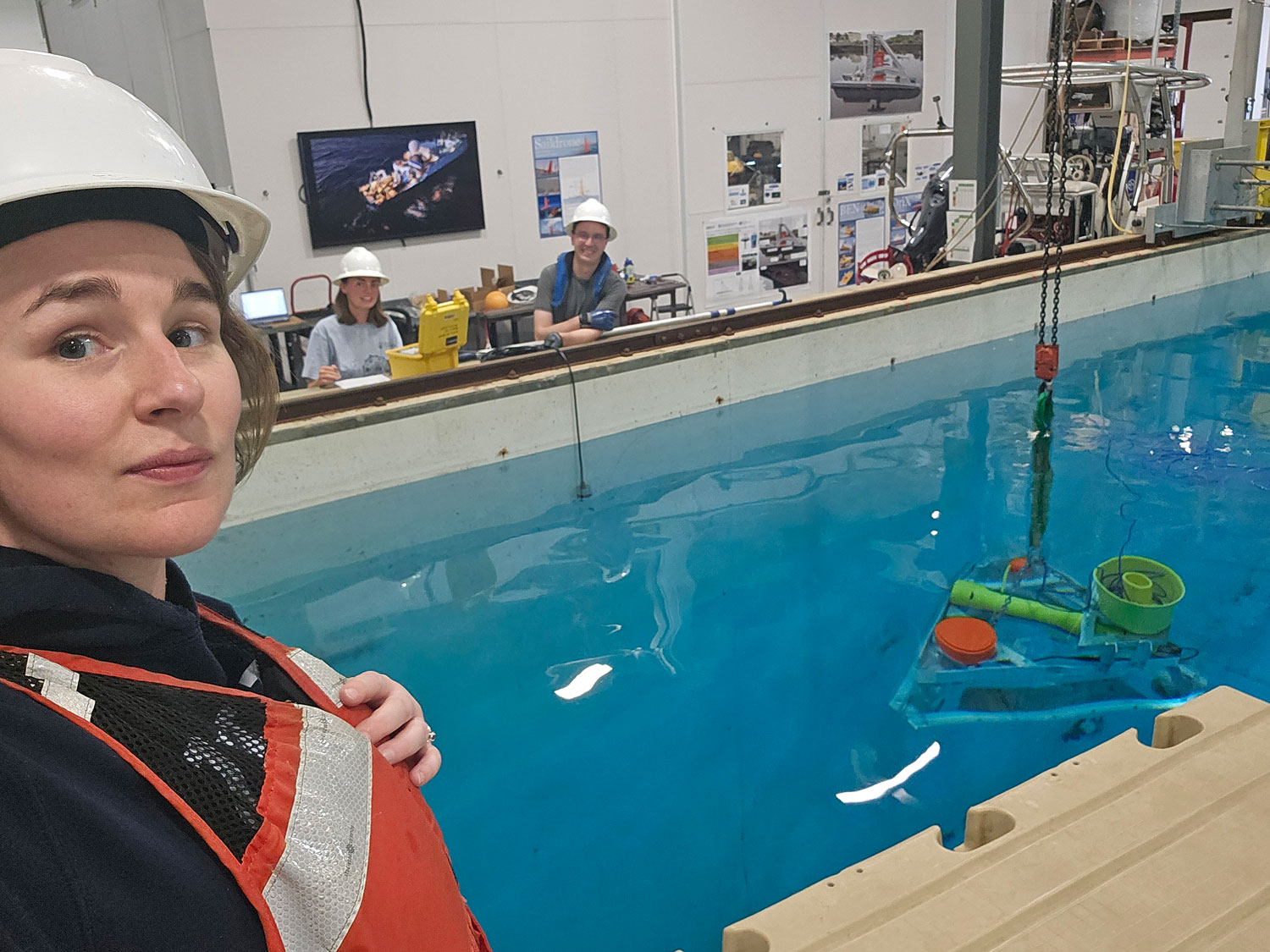
The lander was developed, assembled, and tested at the University of Connecticut, in close collaboration with Professor Tom Blanford from the University of New Hampshire. A new DMS graduate student, Cloé Mueller, who joined the lab in the fall, played a key role in system testing and preparation.
The lander will be deployed this summer in Svalbard near a marine-terminating glacier, where it will collect long-term acoustic measurements. These data will help the Broadband Acoustics Lab better understand how melting glaciers influence ocean structure, underwater sound propagation, and the rapidly changing Arctic environment.
Travels to the Other Side of the World
Posted on by Hannes Baumann
By Eva Scrivner
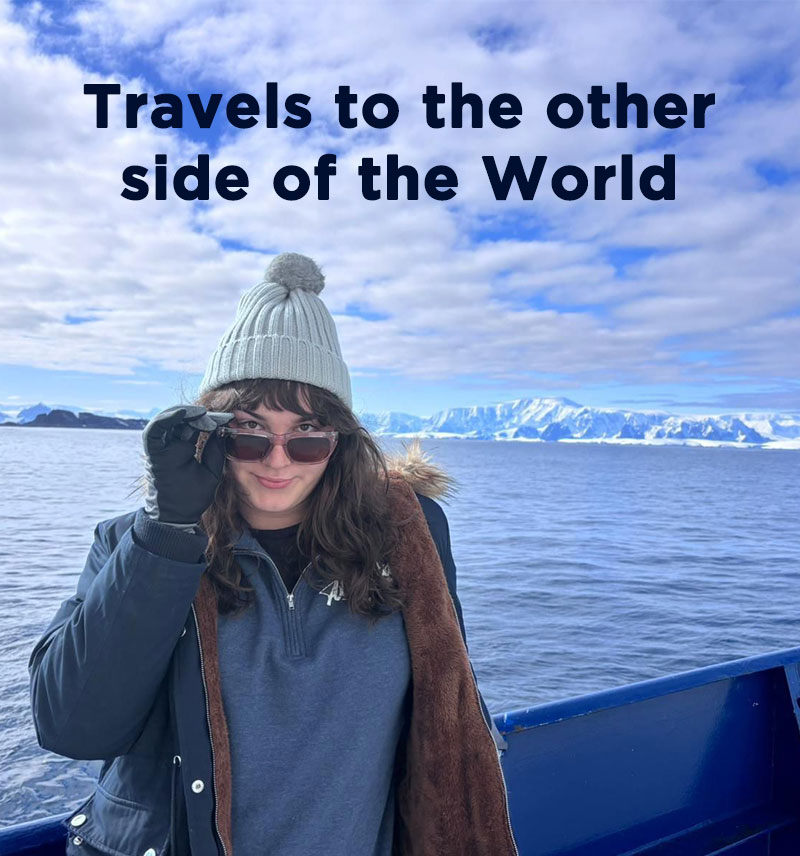
Most folks spend the holidays relaxing in front of a warm fire under an even warmer blanket. Graduate student Eva Scrivner (Heidi Dierssen Lab), however, will have an entirely different set of plans for the winter break: heading to the Palmer Station LTER in Antarctica. Naturally, we had one big question:
WHYYYYY?
From a scientific perspective, this region is very important: connecting major ocean basins, deep water formation, and ventilation of deep water and linking the ocean conveyor belt. Lots of biology can be found here. Increased phytoplankton populations fuels rich food web for megafauna like penguins and whales. The Southern Ocean is also an important source and sink for atmospheric carbon.
We will be joining the Palmer Station LTER team to help continue routine research and take optical measurements to characterize the unique coastal Antarctic waters. These waters are often much bluer for a given chlorophyll concentration than that of the global ocean, causing traditional satellite approaches to perform poorly in this region. Through our measurements, we aim to understand the underlying optics within these blue waters and refine satellite retrievals accordingly.
Field trips are extremely hard to plan! Three different vessels, funding issues, shifting dates were all complicating factors in planning the 8-week trip. As the representative from the Dierssen lab, I will be joining the phytoplankton biology group, with my particular specialty being the optical instrumentation.
Life at the bottom of the world means really long days with the sun low on the horizon. This can mess with natural Circadian rhythms, which we fight with creating spaces with as much darkness as possible. Even before I travel to this region, because it is mentally and physically taxing, I had to undergo a rigorous health check. You are down there with limited medical resources (although some emergency care), so you have to be pretty tough.
In my free time, I’ll have a Switch 2 for video games. I’ll also be downloading lots of papers and books! I also got some great advice to bring treats for yourself: little pick-me-ups or stuff to remind you of home. I’ll also have a family chat channel where I can keep them up to date!
My advice for students is to be open-minded, take a risk, and introduce yourself to a lab that does research that resonates with you. Satellite imagery really resonated with me after learning about it from a career opportunity class, which set the course to where I am today!
Follow Eva and the Dierssen lab at:
@colorslab @linkedIn/in/eva-scrivner
Alumni profile – Tyler Griffin
Posted on by Hannes Baumann
Anne: Why did the topic of microbial biology of mussels interest you?
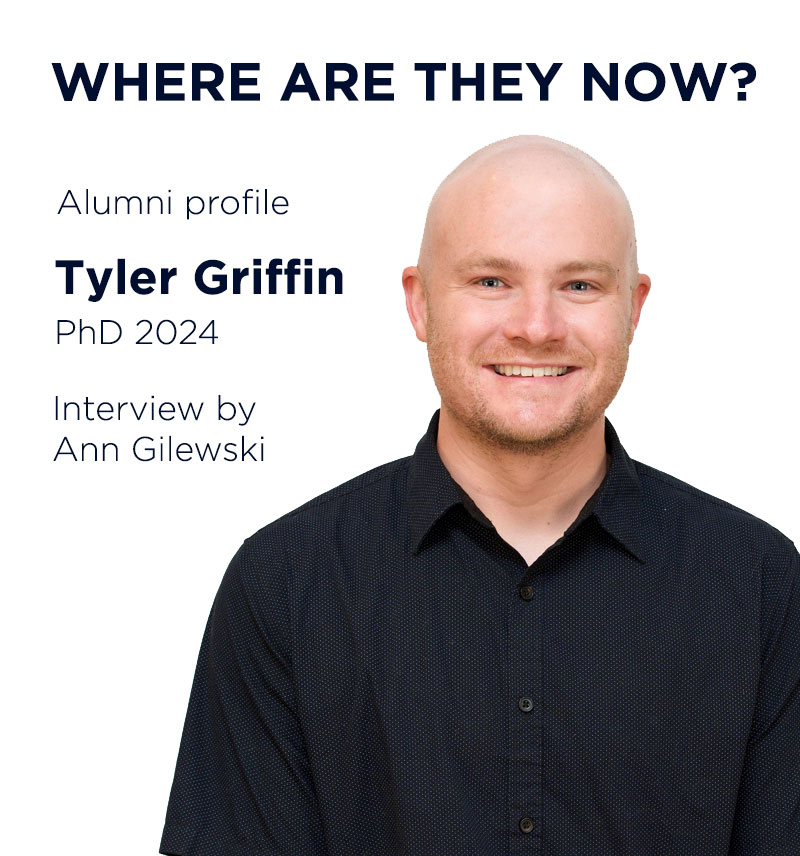
Tyler: My dissertation investigated the bacterial communities associated with blue mussels and ribbed mussels (i.e., their microbiomes). Among the various chapters, I was elucidating the microbial community structure of their guts and feces under natural conditions and in response to anthropogenic disturbances. One of my core findings was that the mussel’s gut microbiome should really be considered as two separate groups of microbes: the resident group that lives full-time in the digestive tract (and may interact more intimately with the animal) and the transient community, which is more diverse and consists of ingested microbes that either get digested in the gut or pass right through with feces.
Going into graduate school I knew I was passionate about marine invertebrates and fascinated by microbial symbioses. Mussels make an excellent study species for this type of research because they are easy to collect in Long Island Sound, hardy and amenable to durations in the laboratory for experiments, and important members of coastal ecosystems. Bivalve molluscs are so interesting because their anatomy differs greatly from the typical vertebrate anatomy (e.g., different than us humans). Much is being learned about the human microbiome and its role in health and disease, but all animals with a gut might also interact significantly with digestive microbiota. Perhaps the anatomical, ecological, and evolutionary differences between vertebrates and invertebrates like mussels have led to significant differences in relationships with microbiota. These possibilities keep me committed to this research. To have a fuller understanding of animal biology and the marine environment as a whole, we need to better refine our understanding of invertebrate animals as ecosystems for microorganisms and better evaluate the relationships that take place between microscopic and macroscopic organisms. Long story short: mussels are cool little aliens and I wanted to investigate an aspect of their biology that was previously understudied (and that modern technologies allow us to examine in fine detail).
Anne: What inspired you to complete a doctoral degree?
Tyler: I had the opportunity to engage in collaborative research with faculty members when I was doing my undergraduate studies. I loved the research experience, mostly the excitement about discovering something about the natural world that no one had ever known. I was hungry to make a career out of research, so graduate school was the logical next step. During my first year in the Oceanography PhD program at UConn, I was a TA for Introduction to Oceanography lab. The experience was challenging but incredibly rewarding, and it opened my eyes to the possibility of combining teaching and research into a career as a college professor. My mom has a doctoral degree in education and worked for many years as a college professor, and it suddenly made sense what my path should be. So, it all kind of clicked into place for me and the goal became to complete the PhD and seek out a job as a faculty member at a primarily undergraduate institution.
Anne: What challenges did you have along the way?
Tyler: COVID definitely posed some significant challenges. I had to postpone experiments and pivot on some projects during those months where we couldn’t go into the Lowell Weicker Building. COVID hit at a point in my graduate career when I still needed to take my general exam part B (PhD students in the Ward lab take a written part B exam). So I decided to make the most of the time I couldn’t make progress on research and study hard for the part B. It wasn’t exactly a fun experience, but at least I was productive and became well-prepared for the exam.
In the early months of my graduate career, when I was still formulating what my specific dissertation would be, there were several moments when I felt overwhelmed, lost, and out of my league. In retrospect, this is understandable and natural for a first-year graduate student straight out of an undergraduate program. What got me out of that rut and back on the path toward confident progress was the community of fellow graduate students in the department and my advisor, Dr. Ward. The Marine Sciences Dept. is full of outstanding people, leaning on their kindness and wisdom is a huge advantage.
Anne: What has life been like post-graduation?
Tyler: Life post-graduation has been a whirlwind! Immediately after my dissertation defense I started a postdoc job at Bowdoin College in Maine where my role was primarily teaching undergraduate biology courses. Then after the academic year I took the summer off to get married (yay!), went on my honeymoon, and moved back to CT. This Fall I started my new job as a tenure-track assistant professor of Biology at Fairfield University. I can confidently say my teaching experiences in the Marine Sciences Dept. during my graduate career were a huge factor in me getting both my postdoc fellowship and current professorship. During the application/interview processes, the potential employers saw that my robust TA experience coupled with my role as an instructor of record meant that I was serious about honing my skills as an educator.
Anne: I am an undergrad in Marine Sciences. What advice might you have for a student considering a graduate degree?
Tyler: The truth is that graduate school isn’t for everyone. I think the best way to approach the decision whether to go to graduate school is best framed through a career-lens. Does the job/career you truly want require a graduate degree? If yes, then that’s a reason to do graduate school. If the answer is no or “I don’t know”, then I might recommend cautious reevaluation. That’s especially true for a PhD program where you might spend 5+ years of your life. You don’t have to start graduate school right away, sometimes six months, a year, or two years of real-world experience can clarify the career question posed above.
Graduate school is partly like an undergraduate program in that there is a considerable amount of coursework. But there is also a research component. There may also be TA responsibilities. In general, your life and path to graduation is much less prescribed for you as a graduate student. It helps to be self-motivating, organized, and punctual in addition to being curious and a diligent worker. Another under-looked part of being a graduate student is the human element. Is the potential graduate program in a physical location where you’d enjoy living? Would you have a support network available to you? Does the school offer graduate students health insurance? Are the stipends enough to live on? These are all questions just as important as ones about curricula or research/advisor fit. Burnout is real and graduate students need to be experienced in self-care. It’s a lot to juggle!
Anne: What was a particularly memorable moment of your graduate program?
Tyler: There are too many memorable moments to name! I was in the graduate program for a long time (seven years!), and there were so many seminal experiences that influenced my development personally and professionally. Celebrating with my peers and lab members after passing the general exam… Spilling seawater that I was trying to pour from a graduated cylinder all over the lab bench because I had been working for 34 straight days, and laughing uncontrollably because laughing was better than crying… Early morning and late night fieldwork in beautiful locations… Leaving at 4 pm for impromptu happy hours with my office mates… Getting notified that my first manuscript had been accepted for publication… Overcoming my nerves about public speaking to stand in front of an audience to teach or present research for the first time… Watching my first undergraduate mentee overcome her nerves and give an incredible research presentation…. Shaking hands with Dr. Ward and my committee members as they told me I passed my dissertation defense… Truly becoming an expert in something, learning how to learn, and forging relationships and friendships that will last a lifetime.
Spring 2025 Departmental Achievements
Posted on by Hannes Baumann
Awards:
Professor Senjie Lin
Prof. Lin received the Darbaker Prize from the Botanical Society of America, honoring his research to better understand the biology of two distinct groups of marine phytoplankton (diatoms and dinoflagellates) that play a major role in global nutrient cycling and phytoplankton community dynamics.
PhD candidate Hannah Collins
Hannah received the World Aquaculture Society Student Spotlight award recognizing the best abstracts submitted by student to the Aquaculture 2025 meeting.
PhD candidate Halle Berger
Halle Berger received the Best Student Poster Award at the 2025 winter science meeting of the Southern New England Chapter of the American Fisheries Society. The poster was about Halle's research on modeling the effects of ocean acidification and warming on Atlantic sea scallop growth to inform adaptive fisheries management.
Grants:
Professors Cara Manning, Leonel Romero, Samantha Siedlecki
Profs Manning, Romero, and Siedlecki have received a $499,570 grant from the Long Island Sound Study Research Grant Program to investigate the drivers of oxygen depletion (hypoxia), and the duration and severity of low-oxygen conditions in western Long Island Sound using a combination of observational and modeling approaches.
Improved Mechanistic Understanding of Hypoxia Drivers in Western Long Island Sound Enabled with Data from a Wire-Following Profiler and Coupled Biogeochemical-Hydrodynamic Modeling
Professor Senjie Lin
Algae are both natural and industrial sources of renewable energy. Collaborating in a Columbia University-led multi-million-dollar project, Prof. Senjie Lin will lead his UConn team and contribute expertise on microalgae to advance the development of algae-based electricity-generating technologies.
ECO-SPARK: Enzymatic Conversion of Organic Carbon into Sustainable Power through Aquatic Reactors and Kinetics, DARPA $1,500,000
Publications:
Prof. Rob Mason
Samples for measuring the concentrations of different forms of mercury in the Pacific Ocean waters were collected on a research expedition from Alaska to Tahiti and analyzed by our research group and those of our collaborators. Former student Yipeng He and Robert Mason participated in the cruise and were involved in the sample analysis.
Starr, L.D., He, Y., Mason, R.P., Hammerschmidt, C.R., Newell, S.E., Lamborg, C.H. 2025. Mercury distribution and speciation along the U.S. GEOTRACES GP15 Pacific Meridional Transect. JGR Oceans 130: Article # 130e2024JC021672.
He, Y., Inman, H., Kadko, D.C., Stephens, M.P, Hammond, D.E., Landing, W.M., Mason, R.P. 2025. Elevated methylmercury in Arctic rain and aerosol linked to air-sea exchange of dimethylmercury
https://doi.org/10.1126/sciadv.adr3805.
Samples were collected on a research expedition in the Bering and Chukchi Seas off Alaska in the atmosphere and in the ocean waters to examine the factors effecting the inputs of various mercury (Hg) compounds to the ocean from the atmosphere and the loss of gaseous forms of Hg to the atmosphere, with a focus on the exchange of methylated Hg forms.
Zhou, C., Liu, M., Mason, R.P., Assavapanuvat, P., Zhang, N.H., Bianchi, T.S., Zhang, Q., Li, X. Sun, R., Chen, J., Wang, Raymond, P.A. 2025. Warming-induced retreat of West Antarctic glaciers weakened carbon sequestration ability but increased mercury enrichment. Nature Communications 16: Article # 1831.
The publication examined how the recent changes in climate is affecting the inputs of mercury (Hg) to the ocean waters off of Antarctica and the relative importance of inputs from the continent versus inputs from the atmosphere, and how these inputs differ for Hg compared to carbon. The study used information from ancient sediments to infer what will likely happen in the future in a changing climate.
Prof. Samantha Siedlecki
Carlson, A. J., Siedlecki, S. A., Granger, J., Veitch, J., Pitcher, G. C., Fearon, G., et al. (2025). Seasonal source water changes and winds contribute to the development of hypoxia in St Helena Bay within the southern Benguela upwelling system. Journal of Geophysical Research: Oceans, 130, e2024JC021702. https://doi.org/10.1029/2024JC021702
This work discusses oxygen dynamics in St. Helena Bay (SHB), a productive area in the southern Benguela Upwelling System off western South Africa severely impacted by low oxygen events through fish mortality events. Specifically, it highlights the seasonal cycle of oxygen, including periods of hypoxia and anoxia, and the role of winds and source water changes in driving these variations.
Professor Hannes Baumann
Mosca, K.C., Savoy, T., R. Benway, J., Ingram, E.C., Schultz, E.T., and Baumann, H. (2025) Age structure and seasonal movement patterns of Atlantic sturgeon aggregating in eastern Long Island Sound and the Connecticut River. Fishery Bulletin 123:127-142
This study combined age analysis and telemetry to show that Atlantic sturgeon of all sizes frequently migrate into upper, freshwater portion of the Connecticut River
Jones, L.F., Schembri, S., Bouchard, C., and Baumann, H. (2025) Molecular identification of larval sand lance (Ammodytes spp.) caught in the Hudson Bay System 2010-2018. Environmental Biology of Fishes 108:305–316
PhD student Lucas Jones used genetics to find out what sand lance species inhabits the Hudson Bay in the Canadian Arctic.
Research Prof. Zofia Baumann
Hansen, G., Shumway, S. E., Mason, R. P., & Baumann, Z. (2025). Mercury distribution with size between the tissues of the northern quahog (= hard clam)(Mercenaria mercenaria). Environmental Pollution, 126287. https://doi.org/10.1016/j.envpol.2025.126287
This study examined the distribution of inorganic mercury (iHg) and methylmercury (MeHg) in the soft tissues of hard clams (quahogs) and found that muscular tissues contained a higher proportion of MeHg, while the viscera and mantle also harbored inorganic Hg.
Graduate student Eva Scrivner
Scrivner, E., Mladenov, N., Biggs, T., Grant, A., Piazza, E., Garcia, S., Lee, C.M., Ade, C., Tufillaro, N., Grötsch, P., Zurita, O., Holt, B., Sousa, D., 2025. Hyperspectral characterization of wastewater in the Tijuana River Estuary using laboratory, field, and EMIT satellite spectroscopy. Science of The Total Environment 981, 179598. https://doi.org/10.1016/j.scitotenv.2025.179598
The research links the chemical composition of effluent wastewater discharge in the Tijuana River Estuary with laboratory, field, and hyperspectral satellite spectroscopy. This work serves to inform real-time water quality monitoring in a heavily polluted coastal urban center.