Awards:
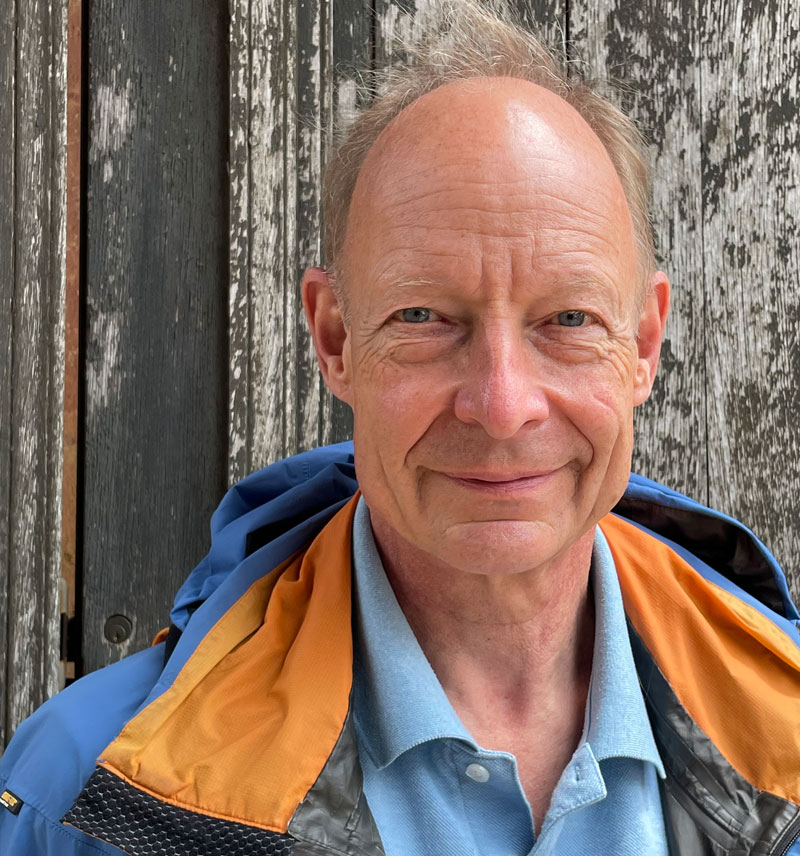
Professor Pieter Visscher
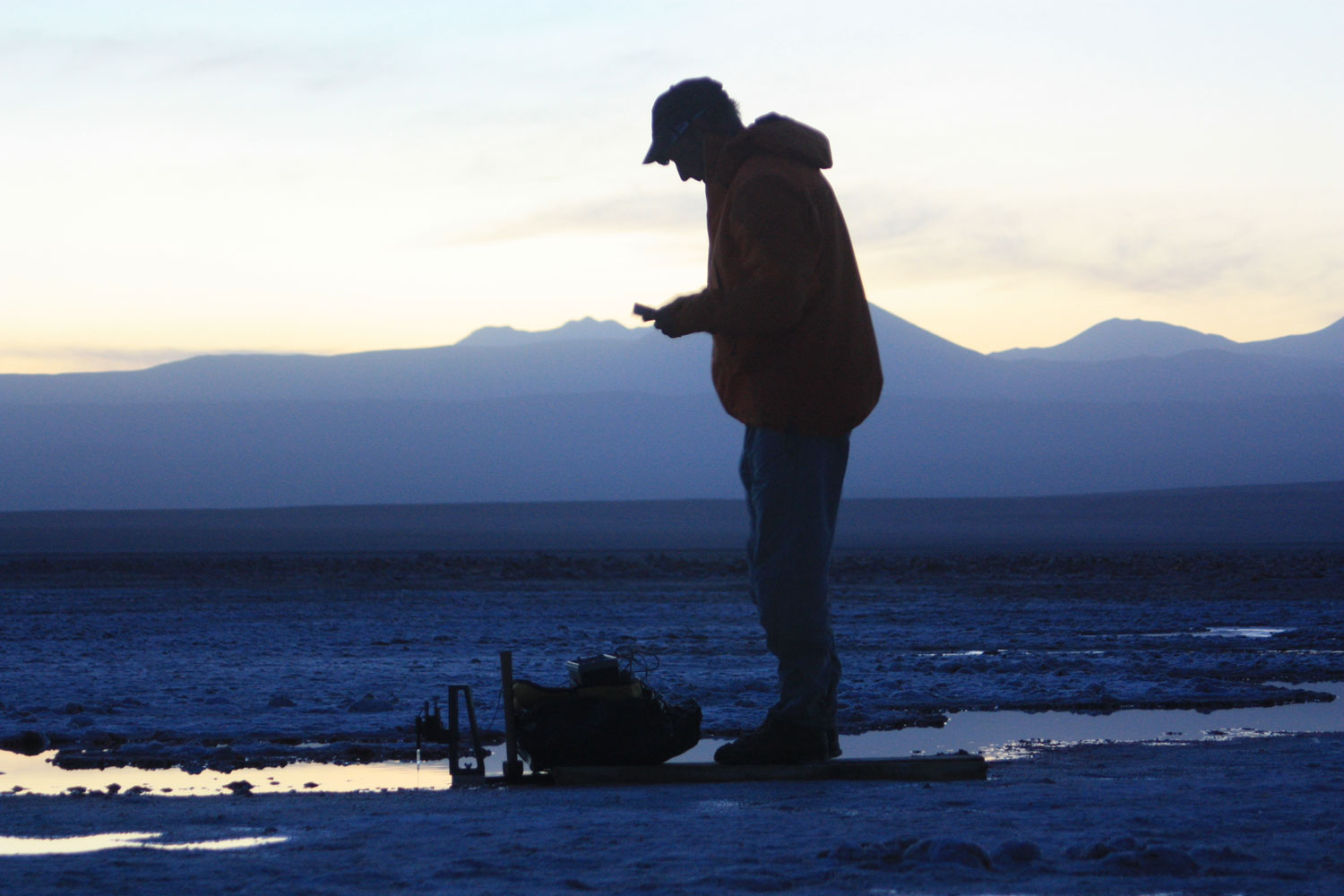
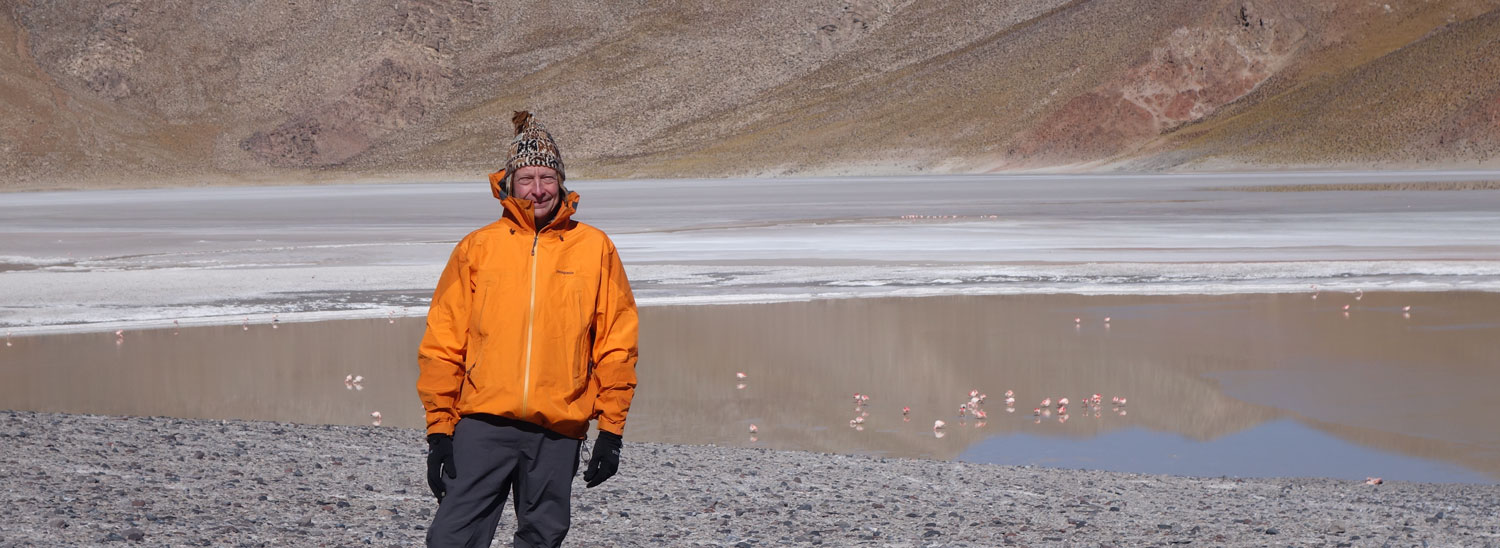
Prof. Visscher received a Distinguished Career Award from The Geological Society of America. Over a distinguished career spanning more than three decades, Dr. Visscher has led advances in our understanding of the complex interactions between microbial communities, biogeochemical cycles, and the formation of sedimentary structures, bridging microbiology and Earth system science. [Read the full citation and reply]
Professor Sandra Shumway
Prof. Shumway was honored as Foreign Fellow by the Korean Academy of Marine Science and became Honorary Life Member in the World Aquaculture Society.
PhD candidate Hannah Collins
Hannah received a Young Outstanding One Health Biology Researcher award from the FUCOBI Foundation of Ecuador for her work on the microbiomes of suspension-feeding bivalves.
PhD candidate Molly James
Mollys' music and science collaboration, Harmony of Nature, with South Korean pianist Sophy Chung and composer Maxwell Lu was recently featured in a Career Feature article in the magazine Nature. The project transforms environmental data and scientific concepts into classical music.
MSc student Anagha Payyambally
Anagha received the UConn@COP Fellowship and had the honor of attending the United Nations Framework Convention on Climate Change Conference of Parties in November 2025. She traveled to Brazil to observe the climate change negotiations process and meet environmental leaders. She wrote about her experiences in UConn Today.
Grants:
Professor Catherine Matassa
Prof. Matassa received a grant from the National Science Foundation to perform a series of manipulative field and lab experiments on organisms that live in the rocky intertidal zone of our coasts. The goal is to better understand how the risk of being eaten influences the behavior and physiology of prey organisms.
Collaborative Research: Intergenerational effects of predation risk and resource identity on rocky shores: consequences for populations, communities, and ecosystems. NSF $400,267
Professors Elizabeth Weidner & Shuwen Tan
Profs. Weidner and Tan received funding to study the impact of the Connecticut River on sediment transport and deposition in Long Island Sound. The goal of the project is to better understand how changing sediment deposition, due to extreme weather events, may impacts local shellfish beds and provide guidance for aquaculture management and restoration planning.
Mapping Sediment Transport and Deposition Risks to Shellfish Beds in the Tidally Modulated Connecticut River Plume. CT SeaGrant (2026-2028 OMNIBUS, $169,882)
Professors Hannes & Zofia Baumann
In collaboration with partners in Massachusetts, this new project will experimentally simulate electromagnetic fields as they are generated by undersea cables, for example those transporting electricity from offshore wind turbines, and then test their potential effects on the behavior and development of sand lance, a burying fish of great ecological importance in North-Atlantic waters.
Investigating the Impacts of Electromagnetic Interference (EMI) on Adult and Larval Sand Lance in Stellwagen Bank National Marine Sanctuary. Massachusetts Clean Energy Center $503,831
Professor Samantha Siedlecki
Prof. Siedlecki together with colleagues from NOAA and co-PIs from other US institutions received funding to improve forecasting and develop practical strategies—combining ocean science, industry input, and social research— to create a resilient, adaptive management framework for the Sea Scallop fishery , which is one of the most valuable in the United States (>$500 million per year). Although scallops have long been resilient, they are becoming more vulnerable as rising ocean temperatures and increasing acidity affect their growth and reproduction.
RVA-OA2025 Project Title: Collaborating with Fishing Communities to Adapt: Co-developing actionable strategies for Atlantic Sea Scallop fishing communities. NOAA, $1,133,554
Publications:
Professor Catherine Matassa
Matassa and recent PhD graduate Sean Ryan investigated how a species of seaweed (Fucus vesiculosus) defends itself from herbivorous snails (Littorina littorea) along its latitudinal range in the coastal northeast USA. Are northern seaweeds built tougher?
Ryan, S. and Matassa, C. Latitudinal variation in the constitutive and inducible defences of a canopy-forming rocky intertidal seaweed (2025) Functional Ecology, 2025, 39(12), 3718-3731
Professor David Lund
Lund and graduate student Monica Garity show that changes in ocean circulation and natural alkalinity enhancement played a key role in regulating atmospheric carbon dioxide in the recent geologic past. The research was featured in UConn Today
Garity, M., Lund, D., Jerris, H., and McBride, J. (2025) Progressively greater biological carbon storage in the deep Atlantic during glacial inception. Proceedings of the National Academy of Sciences 122, e2510171122
Professor Pieter Visscher
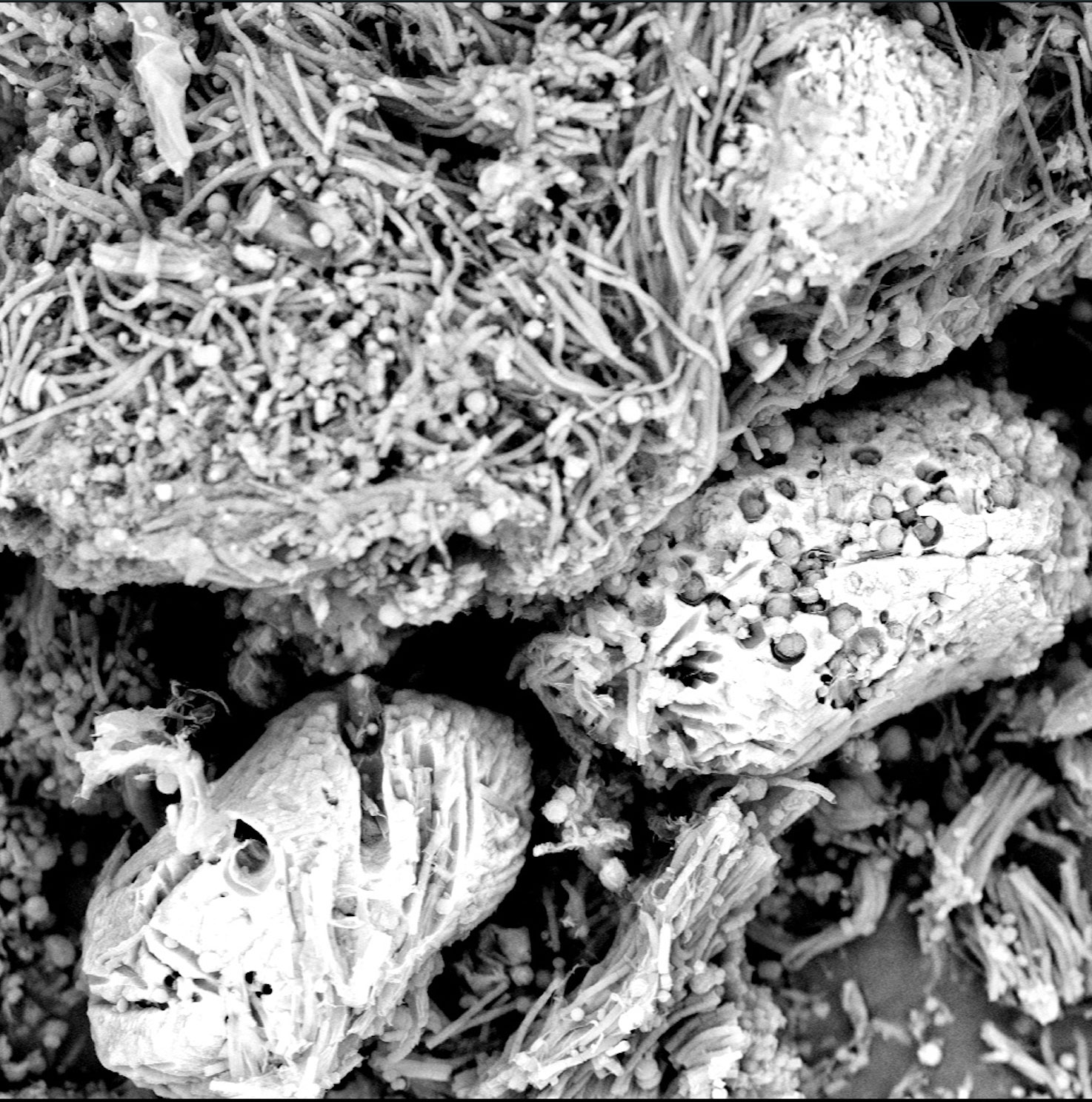
Visscher and colleagues show that instead of whiting events, visible with satellites, calcium carbonate precipitation is mediated in the upper layers of aquatic sediments, and continue there for several millenia. Results suggest a revision of CO2 removal through calcium carbonate precipitation.
Visscher, P.T. et al. (2026) A critical role of heterotrophic bacteria in early diagenesis of carbonates through exopolymer degradation and calcium release. The Depositional Record (16 January 2026)
Professor Heidi Dierssen
Dierssen contributed her expertise in remote sensing methods to new published guidelines for assessing seagrass coverage from areal and space observations. These guidelines help monitoring and assessment of seagrass ecosystems and inform the Kunming–Montreal Global Biodiversity Framework headline indicator “Extent of natural ecosystems”.
Duffy, J.E., ..., Dierssen, H.M., and 21 co-authors (2025) Measuring and Reporting on Seagrass as an Essential Ocean Variable for Science and Management. BioScience biaf199
Professor Hans Dam
A joint team from UConn Marine Sciences/Ecology and Evolution (Professors Dam, Finiguerra, Baumann, and former student James de Mayo) and the University of Vermont (Prof. Pespeni and former postdoc Reid Brennan) used experimental evolution on a marine copepod to show that genetic and epigenetic mechanisms underlie resilience to ocean warming and acidification.
Brennan, R.S., J.A. deMayo, M. Finiguerra, H. Baumann, H.G. Dam, and M. Pespeni (2025) Complementary genetic and epigenetic changes facilitate rapid adaptation to multiple global change stressors. Proceedings of the National Academy of Sciences, 122(29), e2422782122.
Prof. Dam was also part of a large international group recommending key steps to resolve the disconnect between empirical research and models using planktonic organism to simulate ecosystem responses to global change.
Flynn, K. J., ..., Dam, H. G., ... 30 other authors (2025) More realistic plankton simulation models will improve projections of ocean ecosystem responses to global change. Nature Ecology & Evolution, 1-9
Professor Senjie Lin
Prof. Lin published two books in July and August, 2025. "Ecological Genomics of Algae" (CRC Taylor & Francis, 406 pp.) provides an integrative framework linking algal genomes to ecological processes, evolutionary innovation, and environmental adaptation across diverse algal lineages.
"Harmful Algal Blooms: Environmental Factors and Molecular Mechanisms" (Elsevier Academic Press, 306 pp.) integrates environmental forcing with molecular, physiological, and genomic mechanisms to explain the dynamics and impacts of harmful algal blooms.
Professor Hannes Baumann
Baumann's research tested one possible explanation for the increase in black sea bass abundance in Long Island Sound, i.e., that the species may be able to overwinter now in our coastal waters.
Zavell, M.D., Mouland, E.P., Barnum, D.L., Matassa, C.M., Schultz, E.T., and Baumann, H. (2025) Can adult Black Sea Bass overwinter in Long Island Sound, USA? Marine and Coastal Fisheries 17:vtaf014
Professor Robert Mason
A new study showed that atmospheric oxidation of elemental mercury in the Arctic spring can occur over sea ice, not just over land
He, Y. and Mason, R.P. (2026) Direct evidence for sea-ice-driven atmospheric mercury depletion events in the Arctic marginal ice zone. Environmental Science & Technology. Published 1/26.
New laboratory experiments examined how methylmercury accumulates in a dinoflagellate that acquires food via other processes besides photosynthesis
Myer, P.K., Mason, R.P., Baumann, Z.A. (2025) Prey engulfment as the dominant pathway of MeHg uptake in a heterotrophic dinoflagellate. Marine Environmental Research 210:107348
Professor Elizabeth Weidner
Weidner describes novel technology in mapping underwater sea ice - a great summary of which can be found here.
Weidner, E. (2025) Measurements of broadband backscattering from the terminus of a tidewater glacier. J. Acoust. Soc. Am. 158, 504–514
Professor emeritus Peter Auster
Auster and colleagues at NOAA's Northeast Fisheries Science Center Milford Laboratory show that aquaculture gear can be important fish habitat in coastal waters.
Mercaldo-Allen, R. ..., Auster, P.J., ... (10 authors) (2025) Measures of habitat quality for black sea bass using oyster aquaculture cages. North American Journal of Aquaculture, 2025, 1–16.
Professor emerita Ann Bucklin
The MetaZooGene Intercalibration Experiment (MZG-ICE) was a global effort that confirmed the reliability, accuracy and validity of metabarcoding data for monitoring zooplankton biodiversity.
Blanco-Bercial, L., ... (22 authors), and Bucklin, A. (2026) MetaZooGene Intercalibration Experiment (MZG-ICE): Metabarcoding Marine Zooplankton Diversity of the Global Ocean. Mol Ecol Resources 26(1):e70090
Graduate student Paban Bhuyan
Bhuyan and Prof. Romero demonstrated that autonomous saildrones can accurately measure small-scale ocean currents and their changes across space.
Bhuyan, P., Rocha, C.B., Romero, L., and Farrar, J.T. (2026) Acoustic Doppler Current Profiler Measurements from Saildrones, with Applications to Submesoscale Studies. Journal of Atmospheric and Oceanic Technology, e240114
Graduate student Hannah Collins
Collins performed experiments showing how two common species of freshwater mussels selectively ingest or reject microplastics.
Collins, H.I., Olatunji, P.O., Holohan, B.A., Shor, L.M., and Ward, J.E. (2025) Size-based ingestion of microspheres and microfibers by two freshwater mussel species (Dreissena bugensis and Elliptio complanata): Implications for removal of microplastic particles from aquatic systems. Journal of Shellfish Research 44:309-321.
Graduate student Halle Berger
Berger coupled a bioenergetic with a regional ocean model, predicting that warming initially enhances Atlantic sea scallop growth, but by 2100 scallops grow faster yet reach smaller sizes due to the combined effects of acidification and warming.
Berger, H. M., Siedlecki, S. A., Meseck, S. L., Pousse, E., Hart, D. R., Soares, F., Chute, A., & Matassa, C. M. (2026) Modeling the spatiotemporal effects of ocean acidification and warming on Atlantic sea scallop growth to guide adaptive fisheries management. Ecological Modelling 513:111434