By: Anne L. Gilewski
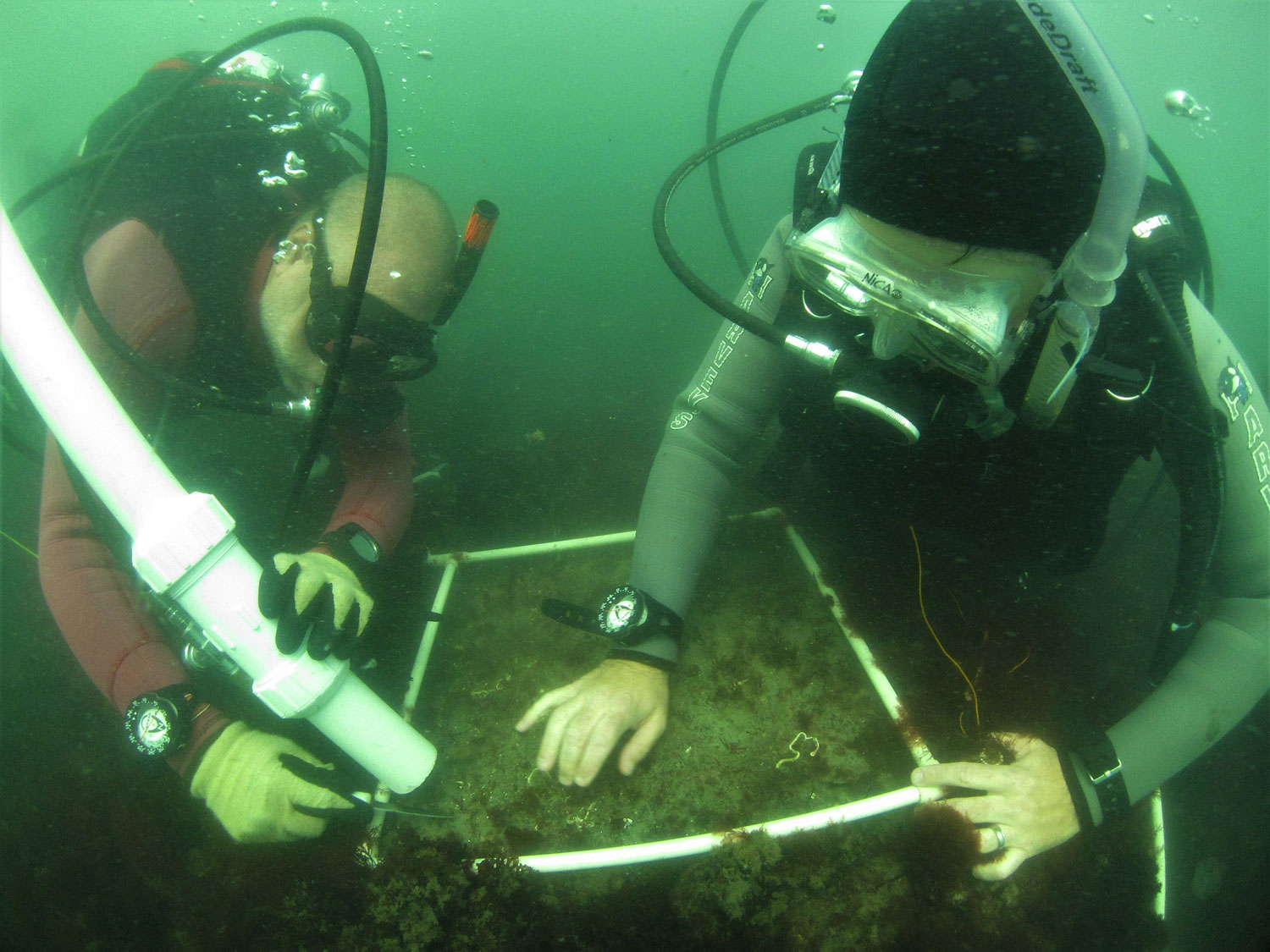
Officially, Jeff is an Academic Assistant at UConn's Marine Sciences Department, but if you’ve ever been lucky enough to interact with Jeff, you know he’s far more than that. Over his 26-year career directing dive operations, Jeff standardized a formal curriculum that includes course work for Open Water Dive and Scientific Diving training and certification. He also maintained all facilities and equipment, approved dive plans, and has been part of countless research projects that require dive operations.
Every superhero has an origin story, so we asked Jeff to share his!
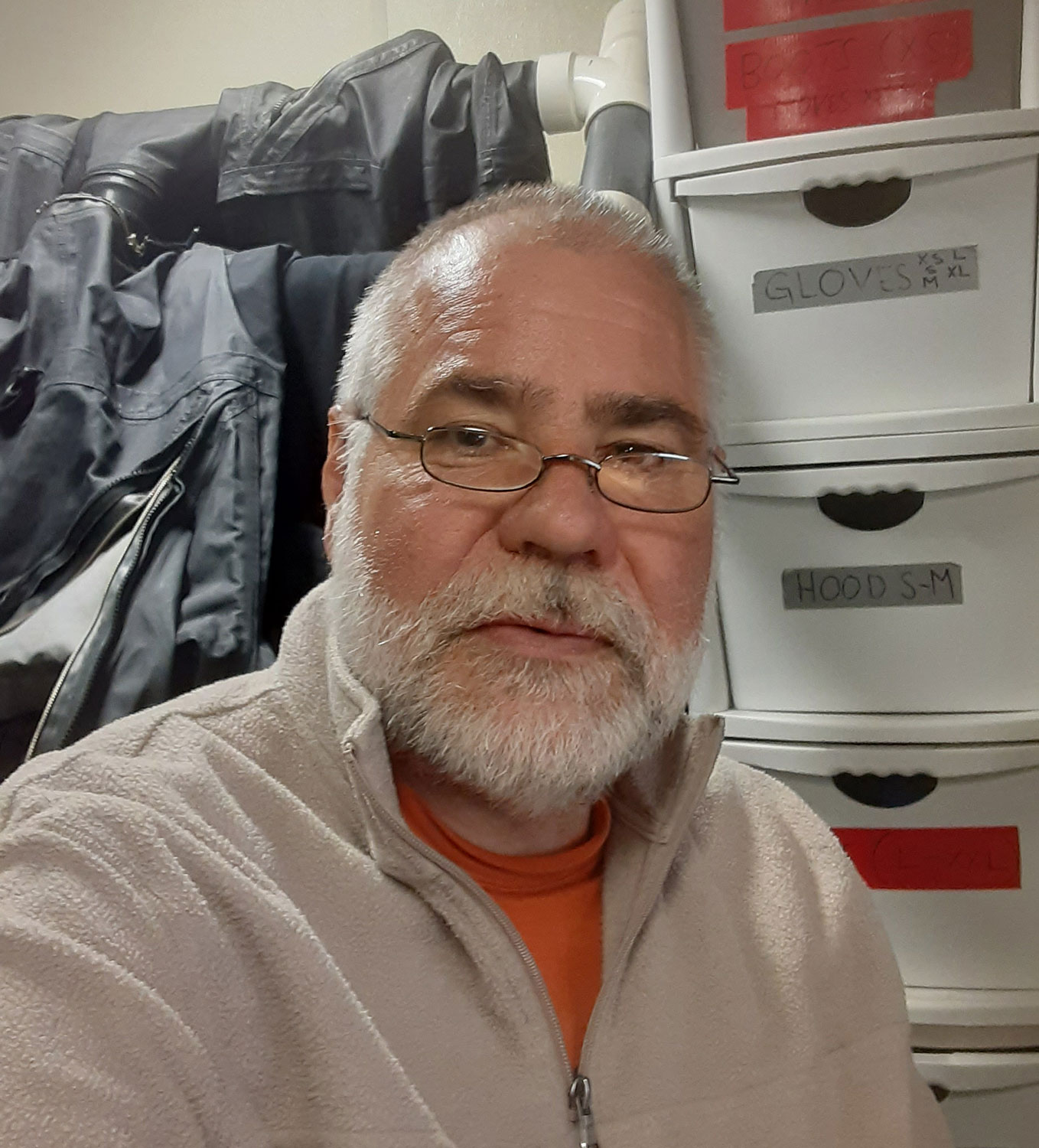
Growing up in Utah, Jeff had three dream jobs in his mind: paleontologist, astronaut, or diver. After watching cartoons, Jeff would switch over to Sea Hunt, a 1958 program about the adventures of an ex-Navy frogman, starring a very handsome Lloyd Bridges. After that was The Undersea World of Jacques Cousteau, a series that often served as inspiration for future marine biologists—including Jeff.
Despite living in a landlocked state, diving found Jeff. During his senior year in high school, when he wasn’t racing motorcycles and boating, Jeff took a diving certification course after school class—a move he says was a good way to get out of chores. Though the impetus may have been to avoid milking the cows, that course set the stage for a lifelong passion.
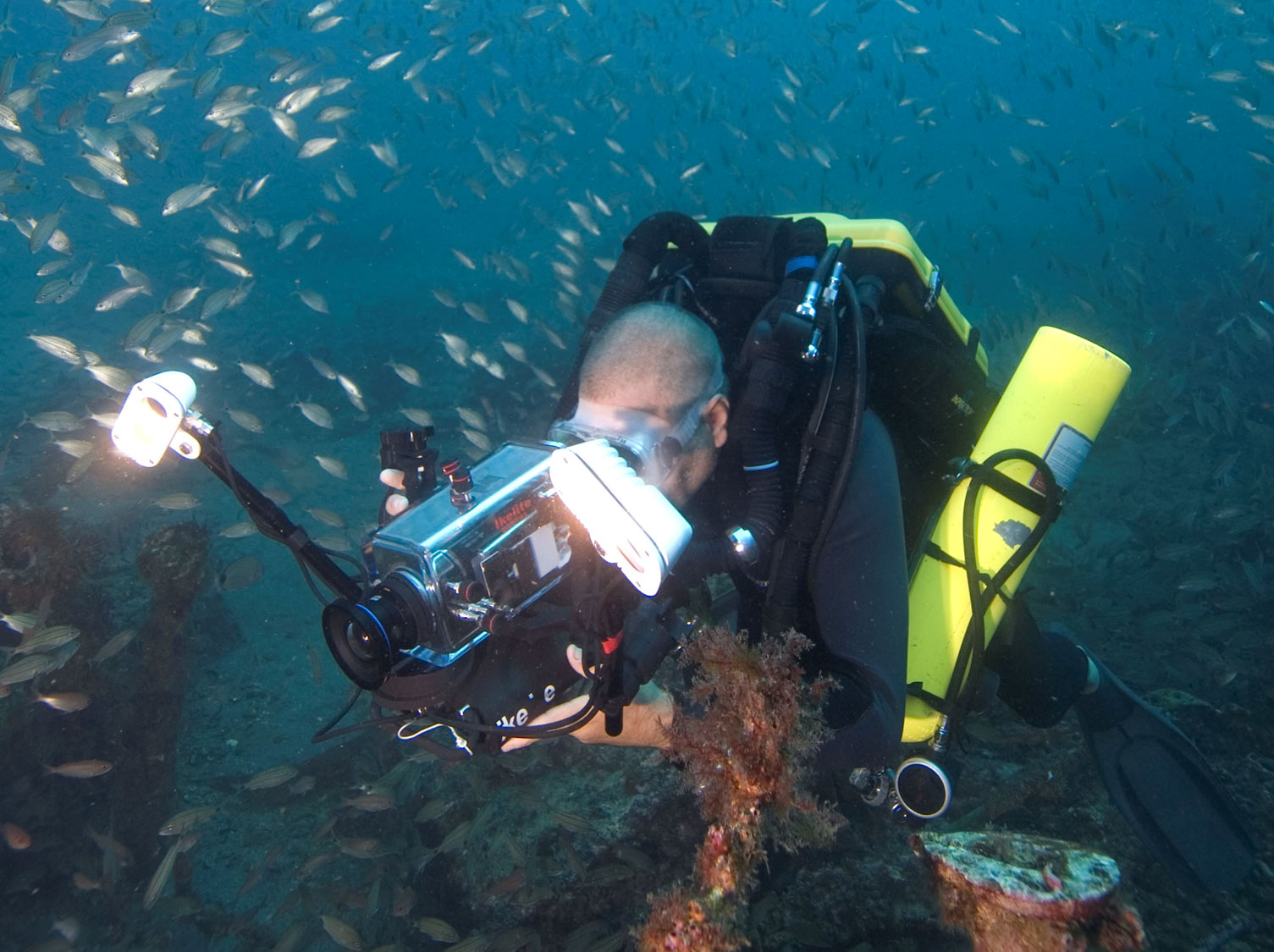
Jeff set out to build up a collection of certifications, started snorkeling, free diving, and collecting daphnia and salamanders for local aquarium stores. At 24, he earned his Dive Instructor certification. In 1987, while earning his bachelor’s degree in Applied Biology from Utah State University, Jeff joined the Utah Fish & Wildlife Cooperative Research Unit as a Field Tech and Research Diver. Being a field diver is most decidedly not a desk job. A typical day might be ice diving in the Flaming Gorge reservoir, or monitoring trout habitat in the Green River, maybe even donning 90 extra pounds to face the white water of the Green River!
After graduation, Jeff accepted a position at the Marine Resources Development Center Underwater Foundation’s MarineLab program in Key Largo, FL. Jeff taught Marine Ecology to students of all ages, conducting lectures on seagrasses, marine algae, mangroves, coral reefs, astronomy, and marine invertebrates—to name a few. A chance phone call from Avery Point librarian Jan Heckman about an open Dive Safety Office position in a small Connecticut town piqued his interest. In 1999, Jeff and his family moved north, and the rest is history. (Thank you, Jan!)
Amongst all the diving Jeff had done, we had to know: What was the most memorable? (Spoiler alert! It was hard to choose).
“Blue water diving in Antarctica. To see that environment—icebergs, Deception, Palmer Station”, Australia, Hong Kong, China, American Samoa, and everywhere in the United States.” Jeff also had the opportunity to dive the USS Monitor and take part in a National Geographic survey in the Bahamas—diving to 430 feet!

We asked Jeff what it takes to be a DSO at a university. Here’s his advice:
DSOs facilitate dive operations to be done safely and efficiently. Jeff strongly believes in looking at universities that have a well-developed program. A STEM degree, with coursework in physics, chemistry, and biology, is a critical piece. A research DSO needs to have a solid science background to effectively communicate with investigators—graduate degrees are not uncommon in this field. Most importantly, spend a lot of time in the water. Diving is a tool; for a diver to be useful, they need to have extensive experience in a variety of conditions.
Any final thoughts?
Jeff is grateful to UConn for supporting his endeavors to increase technology for scientific diving here at Avery Point. His hope for the future? UConn continues to push students to take advantage of these advanced technologies in their academic pursuits.
Thank you, Jeff, for 26 years of service. We wish you the best in your retirement!